
Criminal Court Cases in Muscogee County
Muscogee County does not keep every criminal matter in one court. Superior Court is the felony trial court. State Court hears misdemeanors prosecuted by the Solicitor General. Recorder's Court handles first appearances and probable-cause hearings for jailed people, plus traffic, ordinance, and certain lower-level matters. A Recorder's Court hearing may send a supported charge to the court with jurisdiction over the most serious offense. That early hearing is not a felony trial.
The Superior and State Court clerk maintains accusations or indictments, docket entries, hearings, judgments, sentences, and dispositions. Its counter is on the second floor of the Government Center at 100 10th Street, Columbus, Georgia 31901. The clerk is open weekdays from 8:30 a.m. to 5 p.m. General help is available at 706-653-4370, State Court Criminal at 706-653-4368, and Superior Court Criminal at 706-653-4353.
Muscogee Court Charges Take Two Paths
The filed charge determines the main court route. The Chattahoochee Judicial Circuit District Attorney prosecutes Superior Court felonies, while the Solicitor General prosecutes State Court misdemeanors. An arresting officer's first charge label can change after a prosecutor reviews the facts. Searchers should therefore read the accusation or indictment and the disposition, not treat the booking charge as the final court count.
| Record path | Main office | What it answers |
|---|---|---|
| Felony filing | Superior Court and District Attorney | Indictment, plea, trial, judgment, sentence |
| Misdemeanor filing | State Court and Solicitor General | Accusation, hearings, disposition, sentence |
| Early custody hearing | Recorder's Court | Rights, probable cause, bond when permitted, bind-over |
Muscogee County Case Record Searches
Begin at the clerk's Court Portal page. It routes readers to the official Tyler Smart Search and Hearing Search. The public interfaces are dynamic and may need a current browser with cookies and JavaScript. A case number gives the cleanest match. A party-name search is useful when the number is unknown, but namesakes require comparison of court, filing date, and public identifiers.
- Open Muscogee Smart Search and choose the relevant Cases, Judgments, or Warrants view.
- Enter a case number, record number, party name, booking number, or SO number available to you.
- Narrow the result by location, case type, status, filing date, or warrant status instead of guessing from a name alone.
- Read the parties, charge counts, events, hearings, and disposition together. Check Hearing Search for scheduled proceedings.
- Ask the clerk for an accusation, indictment, final disposition, or certified copy when the public display is incomplete.
| Field Label | Type | Required | Notes |
|---|---|---|---|
| Case / Record Number | Text | No | Best for a known Muscogee court file |
| Party Name | Text | No | Person or business; advanced mode supports name choices |
| Booking / SO Number | Text | No | Connects a known jail identifier to portal records |
| Location / Case Type | Select | No | Includes Jail, Recorder's, State, and Superior locations |
| Status / Filing Date | Select / date | No | Helps separate open matters from disposed cases |
Muscogee Criminal Hearing Filters
Hearing Search serves a different purpose from Smart Search. It can filter arraignments, bench trials, guilty pleas, show-cause matters, trials, and probation-violation hearings. Search types include case number, party name, attorney, bar number, judicial officer, and courtroom. Party-name mode requires first and last name and offers a Sounds Like option. Date and location filters can limit a long list.
Locations include Jail, Municipal, Probate, Recorder's, State, and Superior settings. Courtroom choices are more exact, including Recorder rooms, State Court rooms, Superior Court rooms, hearing rooms, Zoom, and a to-be-determined setting. A calendar entry proves that an event was scheduled, not that it occurred or resolved the charge. Confirm a result in the docket.
What a Criminal Case File Contains
A Muscogee County case file follows the prosecution after filing. The most useful items are the charging document and final disposition. Events between them explain how the court reached that result. Public portal data may summarize the file, while document images, a complete cost ledger, or a certified outcome may require a clerk request.
| Case Number & Court | Identifies the file, location, type, status, filing date, and judicial officer. |
|---|---|
| Charging Document | The accusation or indictment states the counts filed by the prosecutor. |
| Docket Entries | Chronological filings and events, including pleas, motions, and judgments. |
| Hearing Dates | Type, date, time, courtroom, and judge when public and entered. |
| Disposition & Judgment | Shows how each filed charge ended, not merely how the arrest began. |
| Sentence & Conditions | Custody, probation, fines, or other terms entered by the court. |
Muscogee Criminal Court Copy Orders
The clerk's copy-request instructions cover counter, email, and mail service. The criminal mail form asks for the defendant, case number, year, charge, and desired accusation, indictment, final disposition, or other document. It also asks for quantity, requester contact details, and return method. Mail requests go to Clerk of Superior Court, Attn: Customer Service, P.O. Box 2145, Columbus, GA 31902.
The form permits payment after a clerk phone call by listed debit or credit cards, or by mailed business check, money order, or cashier's check. Return may be by mail, email, or fax, but certified and expunged copies cannot be sent by email or fax. The clerk may take up to ten business days for mail service. Ask for current cost before sending payment because the needed page count and certification control the total.
The Muscogee clerk copy page is shown below as the official source for those choices.
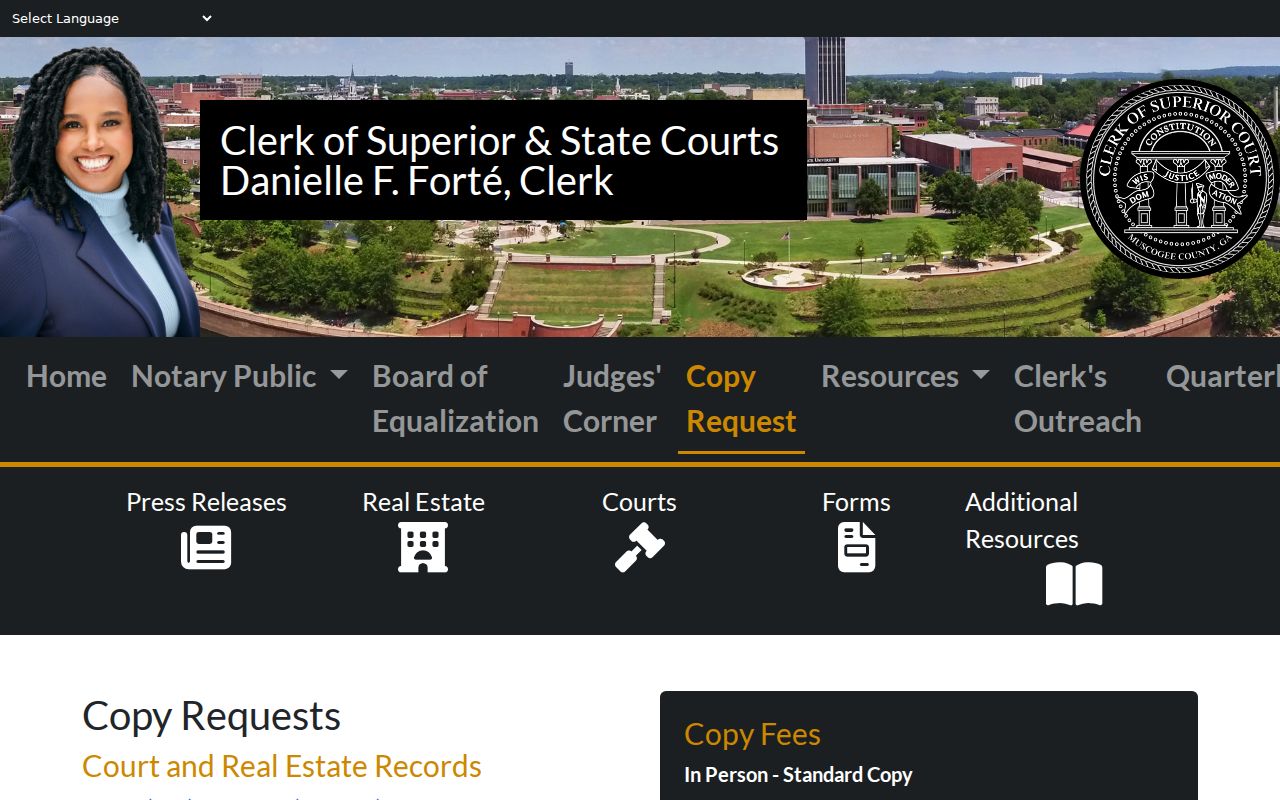
That clerk channel supplies the actual case document when a portal summary is not enough.
Criminal Case Stages in Muscogee County
Recorder's Court may handle the first appearance, explain core rights, address counsel, and test probable cause. Prosecutors then decide what to file. Arraignment is the formal plea stage after a charge reaches State or Superior Court. Pretrial filings and hearings follow. A plea or trial produces a disposition, and a guilty result can lead to sentencing. The docket should be read count by count because one case may have different outcomes.
Case flow: Charges Filed › Arraignment › Pretrial › Plea or Trial › Disposition › Sentencing
Muscogee Court Disposition Terms
Georgia docket terms describe distinct results. They should never be inferred from a jail entry. A missing public value also does not prove that the court failed to act.
- Dismissed
- The filed charge ended without a conviction.
- Nolle prosequi
- The prosecutor chose not to continue the charge at that point.
- Dead docket
- The prosecution is suspended, not finally adjudicated.
- Acquitted
- A judge or jury returned a not-guilty result.
- First Offender
- A statutory deferred and exoneration path that is not an ordinary conviction after successful completion, though disclosure exceptions exist.
If the online disposition is blank or wrong, obtain the correct certified result from the clerk. A person reviewing their own GCIC history can then work with the responsible agency to report the accurate outcome.
Muscogee Criminal Filings by Office
The Chattahoochee Judicial Circuit District Attorney is the local felony prosecutor. Its official page provides context for the Superior Court path.
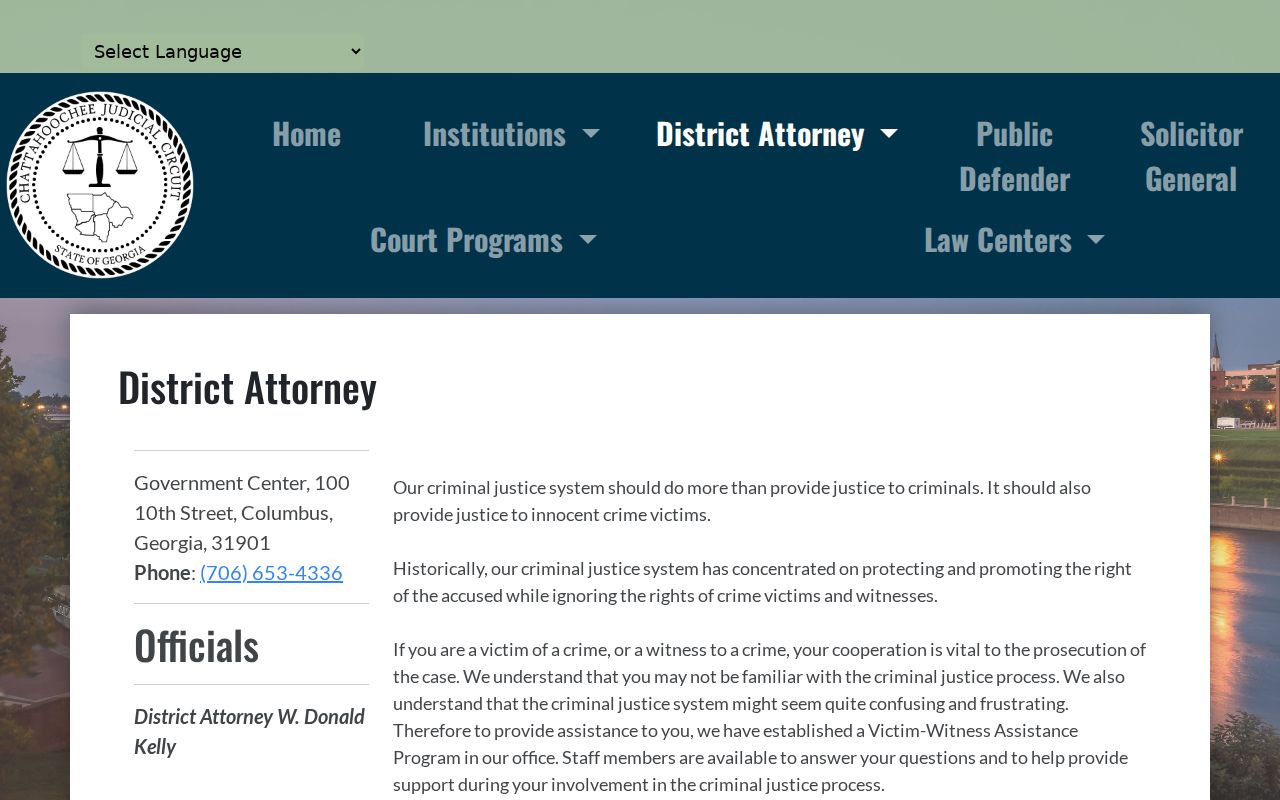
The image links the felony filing route to the office that decides which supported counts proceed in Superior Court. State Court misdemeanor accusations come from the Solicitor General instead.
Access Rules for Case Records
Georgia law favors access to public records under the Georgia Open Records Act, but court access is not unlimited. Full Social Security numbers, protected victim and minor details, and sealed or restricted matter are not ordinary public fields. Juvenile court records are generally confidential. The Muscogee Juvenile Clerk requires a party seeking filings to appear with current photo identification.
Georgia record restriction under O.C.G.A. § 35-3-37 controls dissemination of eligible criminal-history information. Court-file sealing may also be sought under subsection (m). Restricting GCIC data alone does not necessarily remove a courthouse entry. When a public search has no result, ask the clerk whether the case is in another court, requires an in-person search, or is unavailable by law. Do not assume a no-hit proves no case exists.